The WHOLE Framework
Behaviour rarely has one simple cause.
The WHOLE Framework encourages us to step back and explore the complete picture rather than focusing only on what the dog did in one moment.
It helps us consider the dog’s wellbeing, history, body language, lifestyle and environment before deciding what their behaviour means or how best to support them.

W — Wellbeing
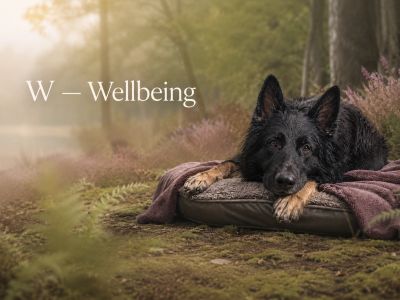
What It Means
Physical health, emotional wellbeing and unmet needs can all influence behaviour.
Pain, illness, discomfort, poor sleep, hunger, stress and difficulty recovering can change how a dog responds to the world around them.
Why It Matters
A dog cannot always tell us directly that something hurts or feels wrong. Behaviour may be one of the first signs that their wellbeing has changed.
Before assuming a dog needs more training, we should consider whether they may need rest, veterinary support or changes to their daily life.
Questions to Ask
- Has my dog’s health or mobility changed?
- Are they sleeping and resting enough?
- Have their appetite, toileting or activity levels changed?
- Do they recover quickly after stress?
- Could pain or discomfort be affecting their behaviour?
Everyday Example
A dog who suddenly refuses to get into the car may not be stubborn. They may be experiencing discomfort when jumping, turning or balancing.
Understanding this changes the response from pressure and repetition to investigation and support.
H — History
What It Means
Every dog brings a unique history.
Past experiences, previous learning, relationships and significant life events can all influence behaviour today.
Why It Matters
What appears to be an overreaction may make more sense when we understand what the dog has experienced before.
A dog does not need to have experienced obvious trauma for their history to matter. Repeated frustration, limited social experiences or accidental learning can also shape behaviour.
Questions to Ask
- What has my dog experienced in similar situations?
- What happened earlier that day?
- Has this behaviour helped them gain distance or safety before?
- Has anything recently changed?
- What may my dog have learned from previous responses?
Everyday Example
A dog who barks when someone reaches towards their collar may have learned that hands near the neck predict restraint, discomfort or the end of something enjoyable.
Their response may be protective rather than deliberately difficult.
O — Observation
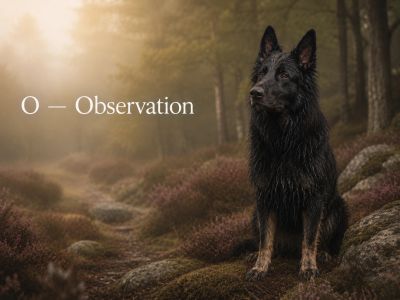
What It Means
We look before we label.
Observation means paying attention to body language, behaviour, surroundings and context before drawing conclusions.
Why It Matters
Dogs often communicate through subtle changes before more obvious behaviour occurs.
A head turn, lip lick, pause, lowered posture or attempt to move away may be easy to miss.
When these quieter signals are overlooked, the dog may need to communicate more strongly.
Questions to Ask
- What happened immediately before the behaviour?
- What did my dog’s body look like?
- Where was their weight positioned?
- Did they try to move away?
- What changed when the behaviour stopped?
- Are there patterns in when and where it happens?
Everyday Example
A dog who growls when approached on their bed may already have turned their head away, become still or avoided eye contact.
Recognising these earlier signals gives us an opportunity to respond before the dog feels they need to escalate.
L — Lifestyle
What It Means
Daily routines, sleep, exercise, enrichment, relationships and expectations all influence behaviour.
A dog’s lifestyle should meet their individual needs rather than being based only on what people believe dogs should enjoy.
Why It Matters
Too little rest, too much stimulation, unsuitable exercise or constant demands can leave a dog struggling to cope.
Breed tendencies may be relevant, but the individual dog in front of us matters most.
Questions to Ask
- Is my dog getting enough sleep and recovery time?
- Are their breed and individual needs being met?
- Is their exercise suitable for them?
- Do they have opportunities to sniff, explore and make choices?
- Are expectations clear and realistic?
- Is their routine helping them feel secure?
Everyday Example
A dog who becomes increasingly excitable and mouthy every evening may not need more activity.
They may be overtired and struggling to settle after a busy day with too little opportunity for uninterrupted rest.
E — Environment
What It Means
Behaviour is shaped by the world around the dog.
We consider surroundings, triggers, noise, social interactions and the situations in which behaviour occurs.
Why It Matters
The environment can make behaviour easier or harder.
A dog may cope well in a quiet space but struggle in a busy, unpredictable or crowded setting.
Changing the environment can reduce pressure and create better opportunities for learning.
Questions to Ask
- Is the environment too busy or unpredictable?
- Is my dog able to move away?
- Do they have access to a safe resting space?
- Are there too many triggers happening close together?
- Does my dog understand what is expected?
- What could be changed to make the situation easier?
Everyday Example
A dog who barks at visitors may find the doorway noisy, confined and unpredictable.
Creating distance, using a barrier and giving the dog a calm place to settle may be more helpful than repeatedly asking them to stop barking.